Supply Mechanics: What 690 Million Meant in Practice
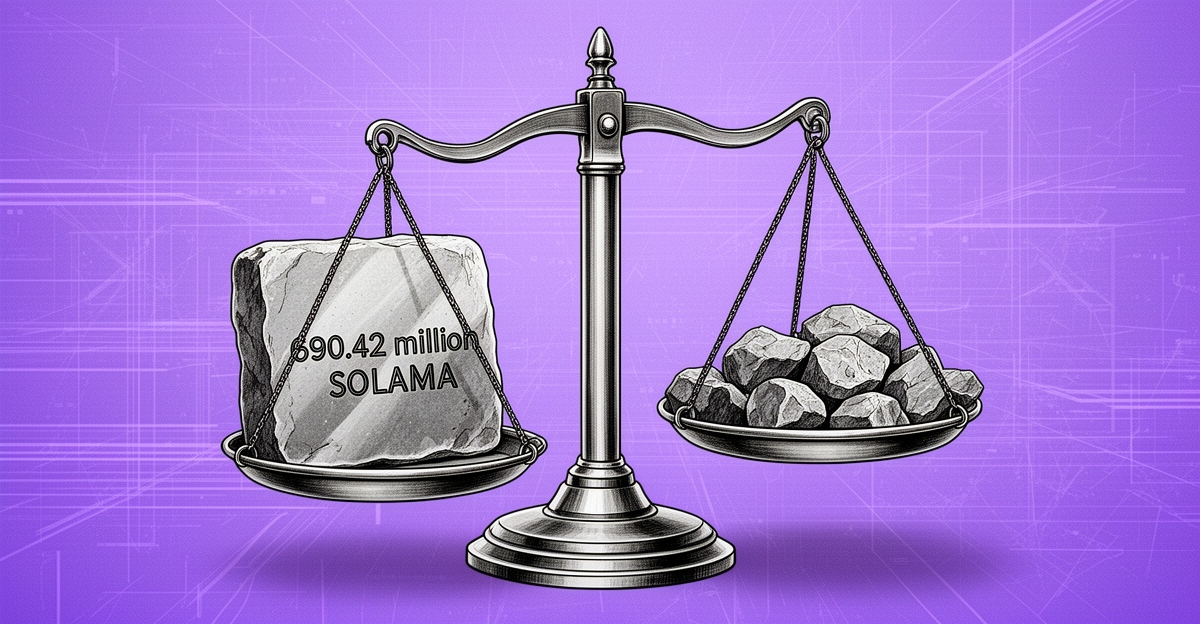
Solama launched on the Solana blockchain on January 1, 2023, with a total supply of 690,420,000 SOLAMA tokens. That figure was carved into the token’s original mint and hasn’t changed, because the smart‑contract owner key was renounced and no further tokens can be minted.
Over time a portion of the supply was intentionally burned. The project’s official website currently displays a circulating figure of 676,602,254 SOLAMA, down from the initial 690.42 million. CoinGecko and Forbes both report a circulating supply of roughly 675.38 million, which is consistent with the burn activity the team has publicized via its social channels, including a community‑operated burn portal at burn.solama.com.
The maximum supply is coded at 1 billion tokens, but because minting is disabled, that theoretical ceiling is effectively unreachable. The on‑chain total supply is whatever remains after burns, and the circulating supply represents all tokens not verifiably locked or provably lost.
- Initial total supply: 690,420,000 SOLAMA
- Circulating supply (post‑burn): ~675–677 million SOLAMA
- Maximum theoretical supply: 1 billion (mint authority disabled)
- All burns are verifiable on‑chain; the official burn page was community‑initiated.
Zero Buy‑and‑Sell Tax and Burned Liquidity
Solama’s transfer mechanics are deliberately simple. The contract imposes 0% tax on both purchases and sales, which means every swap on a decentralized exchange transfers the full token amount between participants. During high‑volatility periods you may still need to set slippage tolerance, but that’s a function of the Solana network’s block‑building cadence, not a contract‑level fee.
Liquidity on Raydium and Jupiter was seeded early, and the associated liquidity provider tokens were burned. Burning LP tokens removes the ability to withdraw the pooled SOLAMA or SOL from the pair, so the liquidity sits permanently inside the automated market maker. This design eliminates one common form of rug‑pull risk: a team that can drain the pool on short notice. It does not protect against price swings, because liquidity depth and the ratio of SOLAMA to SOL still respond freely to supply and demand.
Solama’s token address—AVLhahDcDQ4m4vHM4ug63oh7xc8Jtk49Dm5hoe9Sazqr—can be pasted into any Solana block explorer to confirm the tax status and liquidity pool composition independently.
- 0% buy tax and 0% sell tax
- LP tokens are burned, making the liquidity pair irreversible
- Slippage is only needed during volatile network conditions
- Address verification on Solscan or SolanaFM confirms contract parameters
Treasury Governance: A Multi‑Sig with Three Signers
A treasury wallet funded by project activities sits behind a 2‑of‑3 multi‑signature scheme. The project’s X account and the Coinbase research note both list three designated signers with different operational roles: marketing, development, and community oversight. Any outgoing transfer requires at least two of the three to approve, which removes the risk of a single compromised key draining funds.
Solama’s documentation states that “100% of the revenue” is reinvested into the project, which the team has pointed toward the community‑run crypto casino, an NFT collection, and task‑bot initiatives. Because the treasury is an on‑chain Solana address, anyone can inspect its balance and transaction history through a block explorer, though interpreting the intent behind each transfer requires reading off‑chain announcements.
Multi‑signature treasuries are a common design choice for community‑run Solana tokens. They improve operational safety compared to a single‑owner wallet, but they do not prevent poor allocation of funds or governance disputes. The three signers can agree to do something misguided; the structure only guarantees that no one person does it alone.
- 2‑of‑3 multi‑signature treasury wallet
- Signers publicly listed on solama.com with role descriptions
- On‑chain address allows independent balance verification
- Revenue, not speculative price action, feeds the treasury

Ecosystem Sinks: Casino, NFTs, and Task Bots
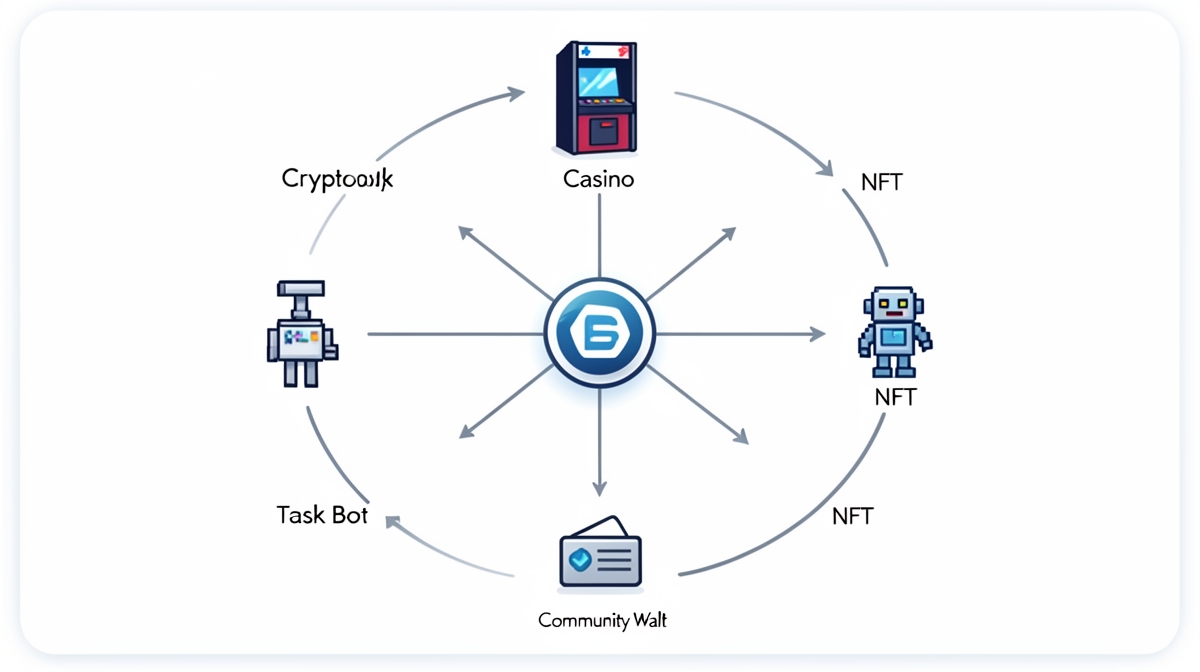
Solama’s tokenomics connect to a set of community‑controlled spending outlets. A crypto‑casino product accepts SOLAMA as a base asset, which redirects some gameplay‑related proceeds back to the treasury. A limited‑edition NFT collection operates as a membership layer, offering holders access to private groups and early announcements rather than royalty streams.
The task‑bot, accessible through the project’s website, creates a feedback loop where community members complete small promotional tasks and receive SOLAMA as a reward. That design keeps transaction volume elevated and spreads token distribution, but also requires that the treasury maintain enough tokens to service tasks without creating a supply overhang.
All three mechanisms aim to absorb tokens into the ecosystem, yet the value of the SOLAMA they distribute is still anchored to market price. If exchange‑wide sentiment turns, the treasury’s purchasing power changes regardless of how well the casino or the task bot are running.
- Community casino: some proceeds recycled to treasury
- NFT collection: access utility, not a passive yield
- Task bot: rewards users in SOLAMA for platform tasks
- Mechanisms provide circulation, but not a price floor
The Risk Model Built into the Numbers
An important structural feature of Solama’s tokenomics is how few safety nets exist beyond what the chain can enforce. Burned LP tokens and a renounced contract are strong mechanical assurances, but they protect only against one class of error: a central actor secretly draining the pool. They do not shield holders from market‑wide Solana liquidity droughts, from smart‑contract bugs discovered after deployment, or from the gradual decay of community attention that tends to afflict meme coins.
The multi‑signature treasury is similarly bounded in what it can prevent. It secures the joint wallet, but it does not dictate what happens when the treasury is spent. If the team allocates funds to a project that fails, the treasury balance shrinks, and the token’s value proposition thins accordingly. That is not a flaw in the tokenomics; it’s a characteristic of any token whose utility and rewards derive from a centralized operational treasury.
Solama’s listing on centralized exchanges like MEXC, BingX, BitMart, and Bitrue is frequently cited as evidence of maturity. While these listings increase the number of accessible markets for trading, they introduce counterparty risk, as holders on exchanges do not directly hold the token in their own Solana wallet. An exchange’s withdrawal freezes or custodial mishandling can create periods where tokens are illiquid for specific users, regardless of how well the on‑chain mechanics are functioning.
Solama’s tokenomics create a tidy container for its experiment, but the container does not determine what’s poured into it. The overall token’s longevity will be decided by demand, not by supply schedules.
- LP burn and contract renouncement protect against one exit vector only
- Multi‑sig secures the treasury wallet, not the projects it funds
- Centralized exchange listings add trading access but exchange custody risk
- Meme‑coin value depends on sustained community attention, not just token mechanics
Practical takeaway
Solama tokenomics is a collection of on‑chain defaults with verifiable properties: a fixed‑supply token with a floating burn rate, a renounced mint authority, a two‑of‑three treasury, and zero transaction taxes. The design eliminates certain categories of developer‑side risk, but it leaves the token’s economic value entirely to the population of holders and the continued functioning of the treasury‑funded ecosystem.
Frequently Asked Questions
What is the maximum supply of Solama?
The code specifies a theoretical maximum of 1 billion SOLAMA, but the mint authority is renounced, so the actual supply can only shrink through burns and is currently around 675 million tokens.
Does Solama have a buy or sell tax?
No. The contract applies 0% tax on both buy and sell transactions. Slippage on decentralized exchanges comes from Solana's block timing, not from a token‑level fee.
How does the multi‑signature treasury work?
A Solana wallet is governed by a 2‑of‑3 multi‑signature scheme. Three designated signers must approve any outgoing transfer, which prevents a single person from draining the wallet.
Are the liquidity provider tokens locked?
The LP tokens on the Raydium and Jupiter pools have been burned, which makes the existing liquidity permanent on the decentralized exchange and stops unilateral withdrawal.